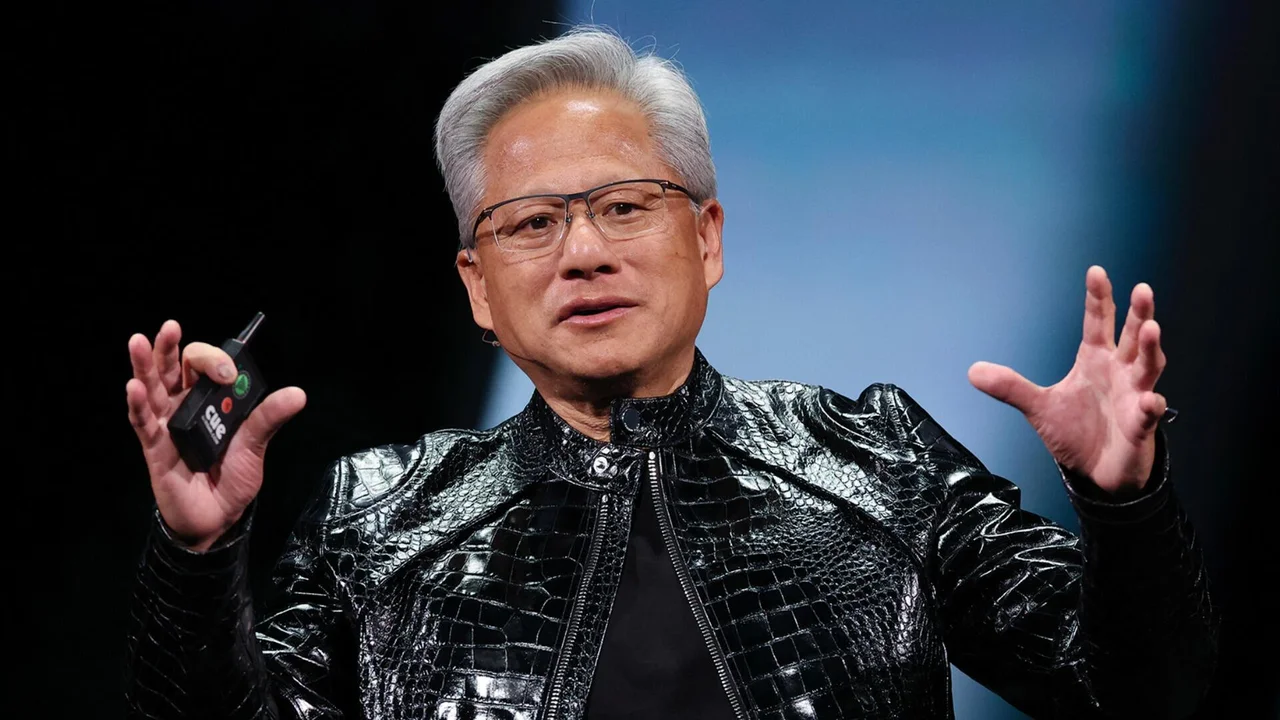
At the Consumer Electronics Show (CES) 2026 in Las Vegas, Nvidia introduced its next‑generation AI compute architecture, named Vera Rubin. The platform aims to significantly advance data center computing for artificial intelligence workloads, offering improvements in performance, efficiency, and cost compared with previous Nvidia systems.
New Platform Designed for AI Workloads
Nvidia’s Vera Rubin platform represents a comprehensive system architecture engineered for modern AI tasks, including large‑scale training, inference, and emerging reasoning‑based models. It combines multiple custom silicon components into integrated AI computing solutions intended to serve hyperscale data centers and enterprise environments.
The platform includes six key chips: a custom Vera CPU, a Rubin GPU, high‑bandwidth interconnects via NVLink 6, ConnectX‑9 SuperNIC network interface cards, BlueField‑4 data processing units (DPUs), and Spectrum‑6 Ethernet switches. Together, these chips support rack‑scale systems designed to handle demanding AI workflows more efficiently.
According to Nvidia, these chips will offer substantial improvements over the company’s previous Blackwell architecture. Rubin GPUs alone aim to deliver multiple times the floating point performance while reducing the number of GPUs needed for certain AI workloads.
Performance and Efficiency Gains
Nvidia executives highlighted several performance and cost benefits during the platform reveal. The Vera Rubin architecture is built on advanced semiconductor technology and extreme co‑design across processor, memory, and interconnect subsystems. This approach can enable up to tenfold lower inference token costs and the ability to train complex model types using fewer hardware resources than earlier systems.
The architecture’s design targets a broad range of AI tasks, including large mixture‑of‑experts (MoE) models and reasoning‑heavy workloads that require high memory bandwidth and rapid communication across components. The integrated NVLink interconnect enables exceptionally high data throughput across GPUs within rack systems, while the high core counts and advanced memory systems boost overall processing capability.
Vera Rubin systems are soon to enter production and begin commercial deployments through major cloud partners and enterprise customers later in 2026. Companies such as Amazon Web Services, Microsoft Azure, and Google Cloud are expected to offer Rubin‑based instances once the platform becomes generally available.
Industry Adoption and Ecosystem Support
Nvidia detailed that a wide ecosystem of cloud providers, hardware vendors, and AI software developers are preparing to adopt the Vera Rubin architecture. This includes both hyperscale cloud services and enterprise data centers building out infrastructure for next‑generation AI workloads.
Industry leaders such as AWS, Google, Meta, Microsoft, and major hardware OEMs like Dell Technologies and Lenovo are among those expected to integrate Rubin‑based systems into their offerings. Early adoption plans reflect a broad consensus on the importance of evolving compute infrastructure to keep pace with increasingly complex AI model demands. NVIDIA Newsroom
Evolution of AI infrastructure
Nvidia’s Vera Rubin platform marks a significant step in the evolution of AI infrastructure, moving beyond incremental GPU upgrades toward fully integrated computing systems designed for modern AI. As demand for advanced artificial intelligence workloads continues to grow worldwide, new platforms like Rubin could influence how enterprises, cloud providers, and research institutions plan and deploy future AI systems. Its performance and efficiency gains may lower barriers to large‑scale AI use and enable more capable models to train and deploy in production environments.