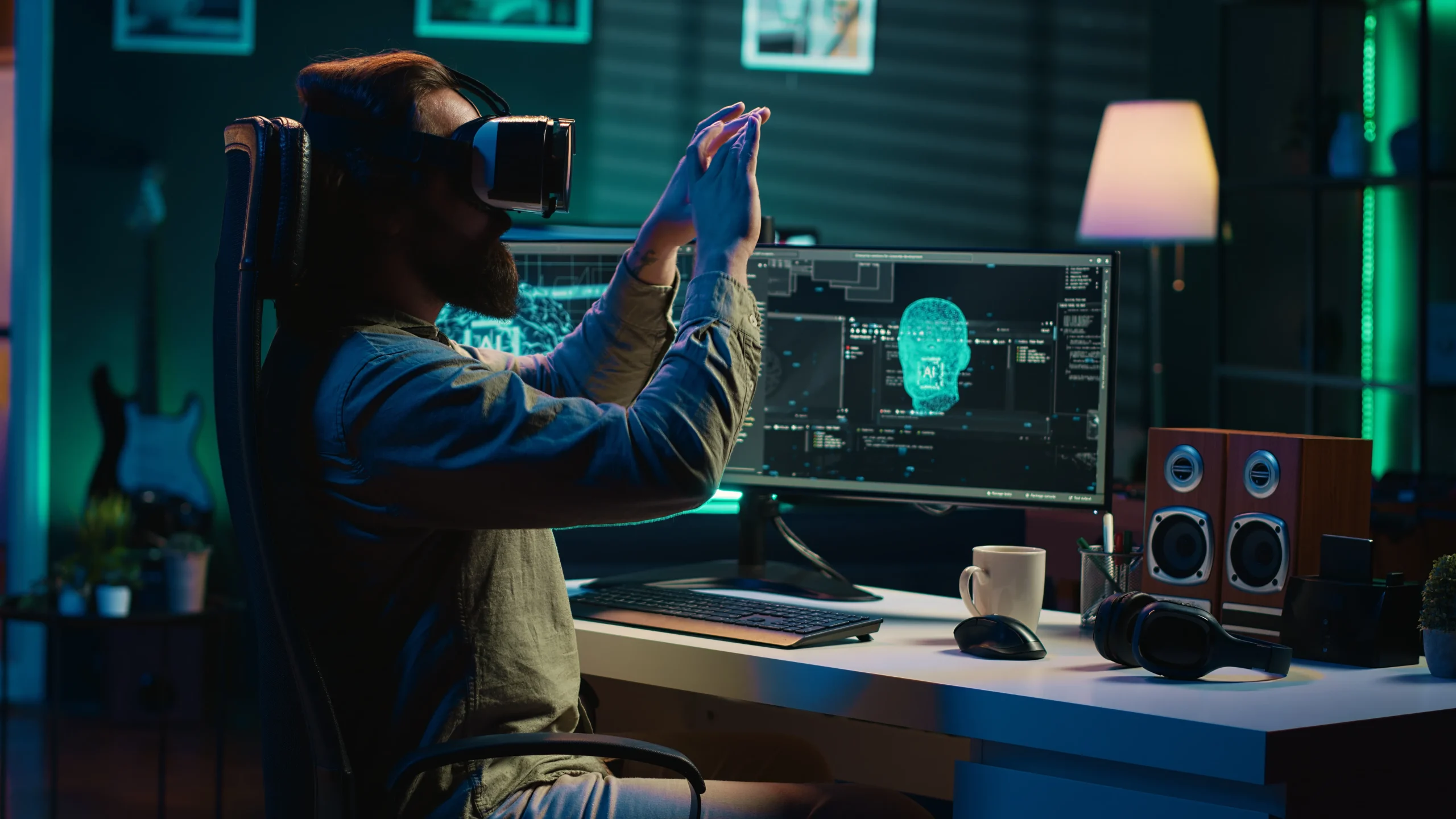
The era of AI in gaming isn’t coming.
It’s already here.
And whether you play, build, or watch, things will never feel the same.
The gaming industry is entering a phase of transformation far deeper than better graphics or new consoles. Artificial Intelligence (AI) is rewriting how games are made, played, and monetized, on a scale we’ve never seen before. From smarter NPCs to procedurally generated worlds, from adaptive difficulty to generative art. AI is no longer a novelty: it’s becoming the engine behind modern game development.
Here’s how AI is already changing gaming, and what players, developers, and studios need to know.
AI-Generated Worlds, Smarter NPCs & Endless Creativity
One of the biggest shifts is in game content creation. AI-driven procedural generation and generative-AI tools are letting studios build vast, dynamic worlds that evolve per player. Terrain, cities, details, textures, and even entire levels can now be generated with far less manual work.
That means games can become richer, deeper, and more varied, without ballooning development timelines or budgets.
AI is also making NPCs (non-playable characters) more believable. Instead of simple scripted patterns, AI-augmented NPCs may remember past interactions, react dynamically to player behavior, and offer more realistic, context-aware responses.
For players, that translates into immersive worlds and unpredictable gameplay: no two sessions feel the same.
Dynamic Gameplay: AI That Adjusts to You
AI isn’t just about visuals or content; it’s fundamentally reshaping gameplay logic. Adaptive difficulty, real-time balancing, smarter pathfinding, and procedural enemy or loot generation let games respond to a player’s style in real time.
In online multiplayer or competitive environments, AI-driven systems help with matchmaking, latency prediction, cheat detection, and fair balancing, imbuing games with fairness and stability.
This kind of AI-powered gameplay personalization raises the bar for immersion and replayability. Gaming is no longer one-size-fits-all; it becomes personal, responsive, and adaptive.
Development Efficiency & Lower Costs for Studios
AI in the gaming industry doesn’t just enhance games for players; it also transforms how studios build them. Repetitive tasks like level design, asset placement, testing, bug detection, and quality assurance can now be partially automated.
That means smaller teams can build larger worlds, indie developers can compete with big studios, and production cycles can speed up.
Several reports show that by 2025, more than 90% of game development studios surveyed are already using AI tools in some part of their workflow, a sign that AI in gaming is no longer experimental.
This overall shift could lower barriers to entry, democratizing game creation and enabling more innovation from smaller teams.
Personalized Experiences & Player Retention
AI in gaming industry is also improving player experience and retention by offering personalization at scale. If a player favors stealth gameplay, AI-driven systems generate levels or enemy behaviors to match that style. If another prefers exploration, the game world adapts.
Moreover, AI-powered analytics help studios understand user behavior, refine balance, detect churn risks, and tailor updates, which keeps players engaged longer.
Games become less about fixed content and more like evolving services that react to players, a shift compelling for live-service titles.
New Challenges: Quality Risks, Ethics & The Human Element
But the integration of Artificial Intelligence in gaming isn’t all smooth sailing. Critics caution that over-reliance on generative AI may lower overall game quality. In fact, many game developers now say they worry AI could lead to bland, repetitive, or algorithmically shallow content if used carelessly.
Another major concern: ethical and economic impact. As AI automates more production tasks, fewer roles may be needed, raising questions about jobs and creative credit.
Plus, AI-driven personalization and procedural generation raise questions about privacy, fairness, and creative integrity. Over-personalization may reduce serendipity; data-driven design may homogenize creativity.
The industry faces a delicate balance: using AI for efficiency and scale, without sacrificing the human creativity that makes games meaningful.
What 2026 and Beyond Look Like for Gaming + AI?
- Expect more small studios launching ambitious games, AI lowers overhead and accelerates production.
- Games will lean more heavily into live-service + adaptive content models, evolving based on player behavior.
- Developers may increasingly adopt hybrid workflows, combining AI-assisted production with hand-crafted design to safeguard quality.
- Users will expect deeper personalization, intelligent NPCs, and adaptive worlds, making “static” games feel outdated.
- Ethical transparency, content disclosure (when AI-generated), and fair credit systems will become more common and necessary.
Build Bigger, Deeper Games with Fewer Resources
If you’re a gamer, expect more responsive worlds, richer AI companions, and truly dynamic gameplay that reacts to your style. If you’re a game developer or indie studio, AI fuels your creativity to build bigger, deeper games with fewer resources.
If you care about the future of AI in gaming as art, AI brings both opportunity and risk; the games that succeed will be those that blend machine power with human imagination.