Search did not change overnight, but it did change fundamentally. Content does not compete only for rankings. It competes for comprehension. Search engines, voice assistants, and generative AI systems all need to understand the meaning of your content, not just where it appears. This is why traditional SEO, on its own, no longer delivers the visibility it once did.
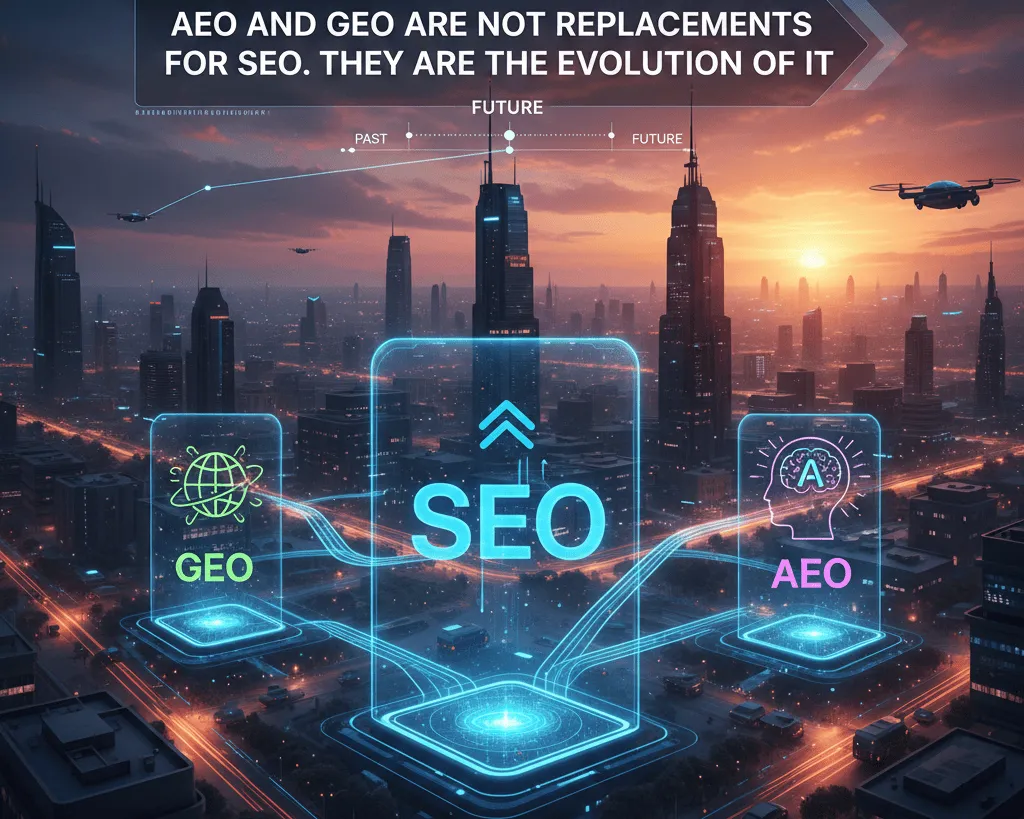
Two extensions have emerged from this shift: Answer Engine Optimization (AEO) and Generative Engine Optimization (GEO). They are often discussed as separate tactics, but in reality, they represent how search now consumes content.
AEO and GEO do different jobs, and treating them as interchangeable is where most strategies fail.
Why Answer Engine Optimization Exists in the First Place?
Search behavior has become increasingly direct. Users no longer search just to read. They search to resolve.
When someone asks what AEO is, how GEO works, or whether SEO still matters in 2026, they expect a clear and immediate answer. Search engines have adapted by elevating content that can respond without ambiguity.
This is where AEO comes in.
Answer Engine Optimization focuses on making your content the most reliable and clearly expressed answer to a specific question. It is not about length or persuasion. It is about precision.
When done correctly, AEO places your content inside featured snippets, People Also Ask results, voice responses, and AI-generated summaries. You are no longer just ranking. You are being chosen.
But this only works for content that is meant to answer something directly. Not everything should be reduced to an answer.
Why Generative AI Needs GEO, Not Short Answers?
Generative AI does not think in snippets. It thinks in relationships.
When an AI system summarizes the future of SEO, compares optimization frameworks, or explains how search engines evaluate authority, it needs more than a definition. It needs context, structure, and depth.
Generative Engine Optimization exists for this reason.
GEO focuses on creating content that AI can understand holistically. It looks for logical progression, topic coverage, conceptual clarity, and consistent expertise. This is why long-form, well-structured content performs better in AI summaries than fragmented or overly optimized pages.
GEO is not about being the shortest answer. It is about being the most complete explanation.
The Real Difference Between AEO and GEO Is Intent, Not Format?
The mistake many marketers make is treating AEO and GEO as technical checklists. The difference is simpler than that. AEO serves moments of immediacy. GEO serves moments of understanding.
If a user wants a definition, AEO wins.
If a user wants insight, GEO dominates.
Search engines recognize this distinction. So do AI systems.
That is why a single SEO strategy cannot apply the same structure to every piece of content. Some pages should resolve questions quickly. Others should guide the reader through complexity.
Why SEO in 2026 Demands Both Approaches?
Traditional SEO still matters. Keywords, internal linking, crawlability, and authority signals are not going away. What has changed is how content is evaluated after it is discovered.
Search engines now assess whether content can:
- Answer clearly
- Explain deeply
- Be trusted
- Be summarized accurately
- Be cited without distortion
AEO helps with the first. GEO supports the rest.
Together, they form a system where content performs across rankings, featured placements, and AI-driven results.
How Smart Content Uses AEO Without Breaking Flow?
AEO does not require robotic formatting.
The strongest content answers key questions naturally within the narrative. Definitions appear when they are needed, not because a template demands them. Clarity comes from good writing, not aggressive structuring.
This is how editorial blogs can still win snippets while remaining readable.
How GEO Builds Authority That Compounds Over Time?
GEO is not about one article ranking once. It is about becoming a reference point.
When your content consistently explains topics better than others, AI systems learn to rely on it, and readers spend time engaging with it, trust signals increase. When ideas connect logically, authority compounds.
This is how content starts appearing in AI citations, search summaries, and long-tail discovery without constant optimization.
The Future of Search Rewards Thought, Not Tricks
The direction of search is clear. Content that exists only to rank will slowly disappear. Content that exists to explain, clarify, and guide will surface everywhere.
AEO ensures your content speaks clearly.
GEO ensures it speaks intelligently.
The strongest SEO strategies in 2026 do not choose between them. They understand when each is needed and apply both without sacrificing readability. That is not a checklist. That is how modern search actually works.