Search has been evolving for years, but the introduction of ChatGPT shopping marks a structural break rather than a gradual improvement. For the first time, a conversational AI does not just help users find information. It actively assists in product discovery, comparison, and decision-making. This shift is forcing brands, marketers, and SEO professionals to rethink how visibility works in a world where answers replace result pages and recommendations replace rankings.
At the center of this change is ChatGPT shopping research, a new way users explore products by asking natural questions and receiving synthesized responses. Instead of browsing dozens of listings, people increasingly rely on AI to narrow choices, explain tradeoffs, and surface what matters most. This transformation has long-term implications for SEO that go far beyond keywords and backlinks.
What is ChatGPT shopping actually?
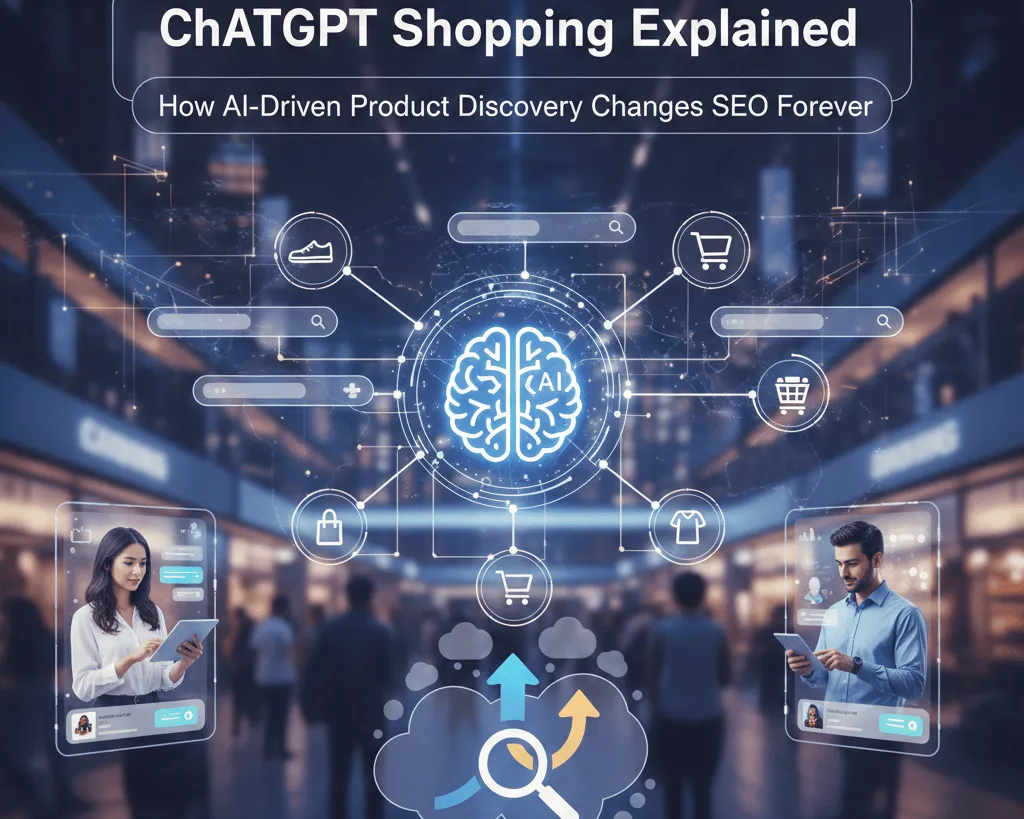
ChatGPT shopping is not a traditional marketplace or comparison site. It functions as an intelligent layer between the user and the web. When someone asks about the best laptop for remote work or the safest skincare brand for sensitive skin, ChatGPT analyzes information from multiple sources, evaluates relevance and trust, and presents a structured response.
This means product discovery happens before the user ever reaches a brand’s website. In many cases, the AI answer may be enough to influence a decision. The role of SEO is no longer limited to driving clicks. It now includes shaping how products are understood, summarized, and recommended by AI systems.
The recent OpenAI ChatGPT search update reinforces this shift. OpenAI has made it clear that search is becoming conversational, contextual, and intent-driven. Shopping is a natural extension of that vision.
Why AI-driven discovery breaks traditional SEO assumptions?
Traditional SEO assumes that users compare options manually. Rankings matter because visibility depends on position. ChatGPT shopping changes this dynamic entirely. The AI does the comparison, not the user.
This creates a winner-takes-most environment. Instead of ten visible results, there may be only one or two recommendations. Brands that are not included do not get partial visibility. They are simply absent.
This is why ChatGPT shopping research is becoming critical. Brands need to understand how AI systems interpret product value, trustworthiness, and relevance. Visibility is now earned through clarity, authority, and consistency rather than keyword density.
How does ChatGPT evaluate products and brands?
ChatGPT does not evaluate products the way a human shopper does, but it also does not rely on a single data source. It synthesizes information from reviews, expert commentary, product descriptions, specifications, and general brand reputation.
What matters most is how clearly a product’s purpose, benefits, and limitations are explained across the web. Overly promotional language often reduces credibility. Vague descriptions make it harder for the AI to compare products accurately.
Brands that invest in clear explanations, transparent claims, and consistent messaging across platforms are easier for ChatGPT to understand and recommend. This is where SEO and brand strategy begin to merge.
The new role of content in ChatGPT shopping
Content is no longer just about attracting clicks. It is about feeding understanding. When ChatGPT generates shopping recommendations, it draws on content that explains real-world use cases, addresses common concerns, and compares alternatives objectively.
This means blog posts, guides, FAQs, and product pages must work together to tell a coherent story. A single landing page is rarely enough. ChatGPT shopping relies on patterns. It looks for repeated signals that reinforce the same conclusions.
Brands that treat content as a long-term knowledge asset rather than a campaign tool are better positioned in AI-driven discovery.
Why authority and trust matter more than ever?
In traditional SEO, authority could be approximated through backlinks and domain metrics. In AI-driven shopping, authority is more nuanced. ChatGPT considers whether a brand consistently appears as a reliable source across contexts.
Mentions in expert content, accurate third-party reviews, and alignment between claims and customer feedback all contribute to trust signals. The OpenAI ChatGPT search update reflects a broader industry move toward quality and reliability over volume.
For shopping decisions, trust is especially important because AI systems are designed to reduce risk for users. Brands that appear inconsistent, exaggerated, or poorly documented are less likely to be recommended.
SEO shifts from optimization to interpretation
One of the most important changes introduced by ChatGPT shopping is that SEO becomes less about optimization and more about interpretation. The question is no longer how to rank higher, but how an AI interprets what a brand offers.
ChatGPT shopping research shows that AI systems favor content that explains not just what a product does, but who it is for and when it is the right choice. This requires a deeper understanding of customer intent and a willingness to be honest about limitations.
Ironically, content that admits tradeoffs often performs better in AI-driven environments because it increases credibility.
The impact on e-commerce and affiliates
For e-commerce brands, ChatGPT shopping can reduce dependence on paid ads and marketplaces if handled correctly. If a product becomes a default recommendation for a common use case, it gains exposure without competing for clicks.
For affiliates, the challenge is greater. AI systems are less likely to recommend thin affiliate content that adds little original insight. Reviews and comparisons must demonstrate genuine expertise and firsthand understanding to remain relevant.
This change rewards depth over scale. A smaller number of high-quality resources can outperform hundreds of shallow pages.
Preparing for a ChatGPT-first shopping future
The long-term impact of ChatGPT shopping is not limited to OpenAI’s ecosystem. It signals how all AI-driven search and shopping systems will operate. Google, marketplaces, and voice assistants are moving in the same direction.
Brands that prepare now by investing in authoritative content, consistent messaging, and real customer value will adapt more easily. Those who rely on outdated SEO shortcuts will struggle as visibility becomes more selective.
The OpenAI ChatGPT search update is not a temporary experiment. It is part of a broader redefinition of how information and commerce intersect.
Conclusion
ChatGPT shopping is changing product discovery at a fundamental level. By placing AI between users and the web, it reshapes how trust, relevance, and authority are measured. ChatGPT shopping research is no longer optional for brands that want to remain visible in search-driven commerce.
SEO is not disappearing, but it is evolving into something more strategic and more demanding. Success in this new environment depends on how well a brand can explain itself to both humans and machines. Those who adapt early will not just survive the change. They will define what discovery looks like in the AI-driven future.